15 tools
Computer Vision
Tools that look at an image or a video — detection, depth, pose, re-identification and generation.
Showing 15 of 15
Hold up one hand fingerspelling an ASL letter and it is recognised live from your webcam. MediaPipe hand landmarks feed a k-NN classifier, entirely client-side. This covers individual letters only, not signed words or ASL grammar — those need sequence models over video and are a genuinely different problem. J and Z are excluded because both require motion a single frame cannot capture, following the same convention as the Sign Language MNIST benchmark.

Upload 5-30 frames from one fixed-tripod night session and find the meteor and satellite streaks in them. Time-adjacent frames are differenced and a Hough transform picks out the trails; a drifting star leaves a paired positive/negative streak that cancels, while a real transient leaves a one-sided one. You also get a median-stacked clean image with those transients removed. It will not tell you which is a meteor and which is a satellite — that proved unreliable to call from a single session, so every hit is labelled as possibly either. Classical OpenCV throughout; no neural network, no GPU.
Upload 2-6 photos of the same static scene from different angles and get an interactive 3D point cloud built from them. This is real Structure-from-Motion — SIFT feature matching, essential-matrix pose estimation, then incremental camera registration and triangulation — the same technique behind COLMAP-style photogrammetry. What it will not do is measure: there is no bundle adjustment, no camera calibration and no dense mesh, so treat the result as a demonstration rather than a forensic-grade tool.
Upload one photo and get a per-pixel depth map, then watch it become a parallax diorama — near objects shift more than far ones as you move your pointer. The model runs on this project's own server rather than any third-party AI provider — your photo is sent there to build the depth map, processed in memory and not stored.
Show your face to the camera, or upload a photo, and see whether it reads as a genuinely present face or a spoof — a printed photo or a screen replay. The same category of check that gates face-unlock and identity verification. The model runs on this project's own server rather than any third-party AI provider — your photo is sent there for the check, processed in memory and not stored.
Upload two side-view walking videos and compare how the two people move. Body pose is tracked per frame, individual stride cycles are found from knee-angle peaks, and each video's strides are averaged into one walking signature before the two are compared. This is not identification: a monocular, uncalibrated view can show that two clips walk similarly, never that they are the same person. Runs entirely in the browser; no video leaves your device.

Upload a clip of your own movement and a reference clip of the same exercise, and see where your form differs. Body pose is tracked in both, six joint angles (elbows, knees, hips) are computed from 3D landmarks, and the two clips are stretched onto a shared 0-100% movement-phase axis so a 4-second rep compares directly against a 6-second one. Joints are ranked by how far apart they drift, with the single worst moment called out for each. Assumes one person and one full rep per clip — a training aid, not a clinical assessment. Runs entirely in the browser; no video leaves your device.

Upload a batch of photos and describe what you are looking for in plain language — 'the red backpack', 'a dog on a beach' — and every photo is ranked by how well it matches. CLIP puts the images and your words in the same embedding space, so nothing needs tagging or captioning first. Nothing is stored between searches.

Track how a plant is actually growing. Upload 2-30 timelapse photos for a growth-over-time curve, or a single photo of several plants to compare their sizes against each other. Foliage area is measured by an HSV green-hue threshold — no model, no API call. Several plants in one shot are separated automatically, and a before/after collage is split and charted as growth. It also reports a vegetation index (a yellowing signal independent of size) and a leaf count, so a decline can show up in the numbers before you can see it.
Turn on your camera and drive a live generative particle visual with your hand movements. Hand landmarks are tracked in your browser by MediaPipe, so no video frame leaves your device. Switch the microphone on as well and particle size and density react to live volume — raw loudness, not beat or genre detection.
Upload a site photo and see, per person, whether a hard hat and safety vest are visible. A dedicated PPE detection model is used rather than a general object detector, since general detectors have no safety-vest class at all. Compliance is only ever read from an explicit present or absent signal the model was trained on — never inferred from something simply not being detected — so an unclear photo returns 'unclear' instead of a false pass. Low-resolution images weaken the result noticeably.

Upload a scanned page or a photo of print or a screen and remove the periodic halftone/moire ripple that scanning leaves behind. A 2D Fast Fourier Transform finds the sharp periodic spikes in the image's frequency spectrum — the tell of a print screen — notches them out with a soft filter, and transforms back. Non-generative: it only subtracts periodic energy that is genuinely present, so it cannot invent detail, and an image with no screen pattern comes back unchanged. Shows the before and after and the spectrum with the removed peaks circled.
Upload a short clip, type what to follow — 'the red backpack' — and get that object masked through the rest of the video. Grounding DINO locates it in the first frame, then SAM2 tracks it forward using its video memory. The result is a downscaled, reduced-framerate preview rather than a full-resolution export.

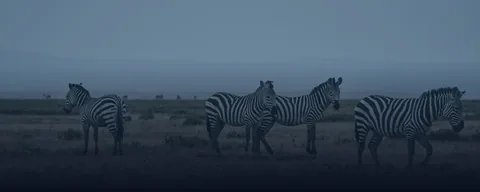
Upload a new sighting and a gallery of past ones and see which individual animal it most likely matches. The animal is cropped out of each photo, then compared using MegaDescriptor, a foundation model built specifically for individual animal re-identification rather than a general-purpose vision embedding. Treat it as a ranking aid, not an identification system — the same/uncertain/different bands are not calibrated against a benchmark. MegaDescriptor is CC-BY-NC-4.0, so non-commercial use only.